Mission and witness belong to the very being of the Church. Mission of God cares and loves all God’s creation. God’s invitation is to all in the community to become God’s co-workers (1 Cor. 3:9) and participate in God’s continuing act of recreating and uniting the whole of creation. The churches and their members are called to be engaged in God’s mission and witness in unity according to the gospel’s principles. The unity of the church is an essential factor in carrying out God’s mission in all contexts. Unity brings to the world the power of the gospel to do what humans cannot do alone. The demonstration of unity empowers the mission and enables effective Christian witness as a divided Church is incompetent for its mission. It is in this context that mission in unity is relevant and both need to be inseparably linked to the relevant theological convictions too. If the mission has to be the mission of God, then the meaning of Christ in life has to be clearly formulated to present it to the world. The faith and our responses to the problems we encounter related to various aspects of our day-to-day lives will have to be meaningfully stated. The theological tasks in relation to the mission also necessitate a thorough re-examination in every context for effective witness. The Church is a pilgrim people and it lives and witnesses in constant readiness to move on in unity with a new vision for its mission. Whatever be the confessional identity or whatever be the missiological interpretation, the Church should remain mindful of the fact that God is continually leading the Church to fulfill God’s mission in the world. So, the theological convictions of the Church should lead us to live in readiness to be led out beyond our present encampment.
Mission in unity remains a goal to which the church aspires. Visible expressions of commitment to attain the goal of mission and unity will then be demonstrated in various ways through collaboration, cooperation, and working together with and among churches and all others who are engaged in God’s mission across their cultural, ethnic, confessional, and denominational boundaries. Churches need each other whether it be locally, nationally, regionally, or globally. However, more holistic approaches and coordinated efforts are needed among all those who are engaged in God’s mission. Mission in unity remains a goal to which the church should aspire. Christian belief is that God is present and active in each context; in the face of neighbor and stranger, and in the life we seek to build together. That is why, for Christians, theology is necessarily contextual as it binds the churches together. Theology is not just a matter of academic analysis. Rather, it emerges from a life of prayer and practice – in a community that meets with God in Word and Sacrament, and that seeks to discern and respond to God’s presence and action in the world. The theological basis of mission emphasizes the nature of unity that warrants a deeper level of understanding and allows for an underlying unity. The unity Jesus and Paul spoke of was based not on externals but on a foundational love for God and a deep commitment to mission and witness. As new issues and questions will arise in every context of human history, new ways of addressing the issues with theological undergirding for churches’ witness also need to be identified and manifested. For example, as we interact with and learn to understand and respect people of different cultures without a spirit of superiority and judgment, we build bridges of tolerance and acceptance. A new missiological understanding is needed in such contexts in order to be responsible for the call for mission and witness. Participating in God’s mission in every situation is an imperative for all Christians and all Churches which need relevant theological understanding and conceptual clarity on their mission. This is the reason that relevant theological undergirding should be applied and articulated when engaged in mission and witness.
The central calling of the ecumenical movement is to respond to the quest for mission and witness in unity. The ecumenical movement is more than a movement for One Church, but it is a movement providing impetus for the Church to proclaim and live out the message of the gospel of Christ in the entire world and participate in God’s mission. The insights and motivations that should sustain the ecumenical movement are not only based on addressing ecclesiastical divisions, but they should be focused on sustaining the spirit of overcoming the obstacles to unity of the whole inhabited world of all God’s creation. We come to realize that the things that unite us are greater than those that divide us.
The call to be engaged in mission is not a specially assigned task of any individuals or specific groups, but it is the responsibility of all those who believe in God’s salvific role in history. God’s call to be engaged in God’s mission is based on the profound demands of Christ’s love to invite all God’s people to share the joy of the fullness of life (John 10:10). A holistic understanding of mission including evangelism, witness and service in different ways leads the church to affirm its faithfulness to God’s continuing act in Jesus Christ. In this way, the mission is a challenge for churches to take the gospel to the entire world. When the church takes its mission in this direction, the such mission is engaged in by and for persons of all social strata, women, and men, young and old, lay and ordained, poor and rich and persons with different abilities.
What we observe Asia today is that many churches and agencies still follow the old and traditional pattern of the mission. Mission is generally perceived and understood by Asian churches as an activity embarked outside their own borders. Others have understood mission as primarily focused on their own contexts, especially the mission mainly focused on religious conversion or proselytization. This warrants a situation that the understanding of mission based on this concept needs to be reinterpreted in order to be moved away from a theological misconception of a proselytizing mission. Instead, the rediscovery of the authentic theological treasures of contemporary relevance should be initiated to permeate a more meaningful missiology in Asia. The centrality of a relevant theological foundation of Asian churches’ mission has to be emphasized rather than anchoring the missiological concepts in orbits of an old style missionary era concept of theology. A profound sense of solidarity and fellowship are to be demonstrated in our common journey of developing renewed ecumenical impetus in Asia, for which an authentic Asian theological undergirding needs to be nurtured. Asian churches in many contexts are becoming aware of the need for inter-contextual engagements and inter-weaving of emerging contextual theologies. However, such initiatives should underscore the values of wider vision for mission and witness with ecumenical commitment which embraces the whole of God’s creation.
Today, the major challenges Asian churches and their mission face are due to “aggressive missionary evangelism”. Several Asian churches are now engaged in aggressive and freelance missionary evangelism with the emphasis given to the individualistic and anthropocentric understanding of “making disciples”, which is considered as their exclusive responsibility. This is adding more scandalous divisions and denominational antagonism, which is in turn leading to proselytizing tendencies resulting in transplanting old fashioned theological debates and practices. As a result, in Asia today, the mission activities of various churches are fragmented. Often global partnerships with regional and national coalitions or denominational identities are hindrances to ecumenical partnership in mission. Bilateral denominational mission relationships based on old mission field connections sometimes distract churches from fostering local ecumenical relationships which ignore the local ecumenical instruments already in place or engaged in the same tasks. This calls the attention of all those who are engaged in churches’ mission including local, regional and global mission partners to collaborate and strengthen mission and witness of Asian churches at all levels. At the same time ecumenical networks and instruments should also be challenged and encouraged to place mission and evangelism among their priorities. Joint action in mission and witness of churches may be helped to avoid repeating mistakes of the past centuries.
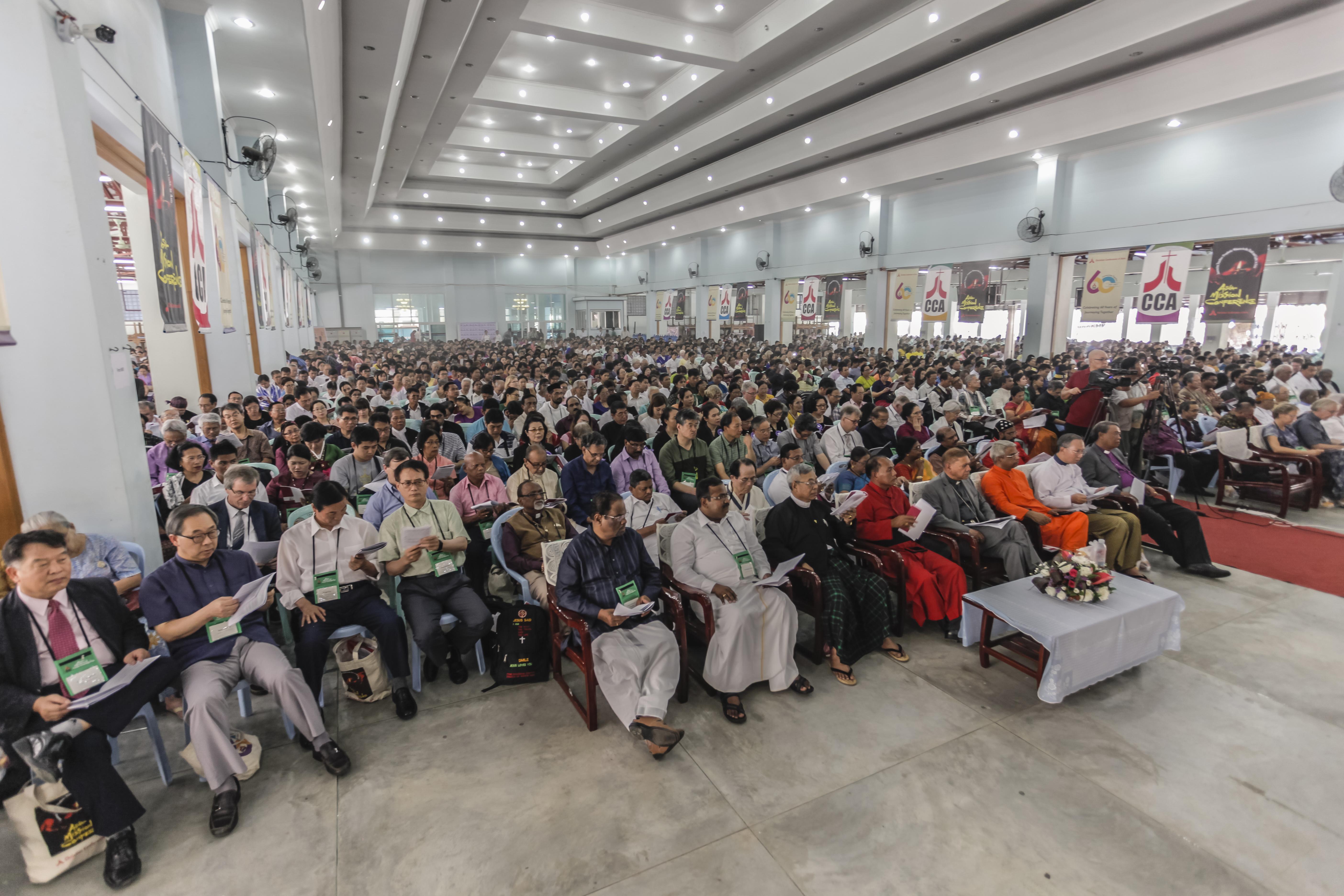
The Christian Conference of Asia will be engaged with the main objectives of strengthening Church’s mission and witness in a multi-religious context; revitalizing and nurturing the ecumenical movement through a united witness in Asia; developing contextual theological undergirding for mission and witness while addressing emerging issues in Asia; and strengthening collaboration and cooperation among ecumenical actors in mission and witness in unity.
The activities that are planned to be conducted over the next five year period to achieve these objectives will broadly include: