Diakonia is central to what it means to be the church and fulfilling the church’s mission and witness as servants. Diakonia is a core component of the gospel and is not an optional but an essential part of discipleship. Diakonia is a gift of the Holy Spirit and a manifestation of practical love for human beings. As such Diakonia reaches out to all persons, who are created in God’s image. While Diakonia begins as unconditional service to the neighbor in need, it leads inevitably to social changes that restore, reform and transform as well as challenges the structural injustices for which God calls prophetic witness by all God’s people. In a situation where the world is becoming more broken, where sin of injustice abound, God in Christ through the power of the Holy Spirit calls the church to gather God’s people of communities.
God’s mission warrants Diakonia as it is deeply interrelated with kerygma (proclamation of the Word) and is witnessing through deeds. Diakonia is not the strong serving the weak, which can often lead to paternalism. The gospel values envision and affirm that Diakonia is part of the calling of all churches regardless of size and all Christians regardless of wealth, because we believe that all of God’s people, individually and as communities, are blessed with gifts to share in different ways as we are called to take seriously the suffering in the world, a world afflicted with poverty, violence and injustice and environmental degradation. We are also reminded to challenge all theological interpretations that do not take seriously the systems, structures, and powers that foster, or even benefit from poverty, violence, and injustice, and environmental degradation. In the incarnation, God’s identification with all of humanity, indeed with all of creation, compels us to identify with all of our sisters and brothers, and the environment in which we live. Christ’s suffering on the cross compels us to identify especially with those of our sisters and brothers who suffer today, moving beyond politeness and pretense, breaking the silence and risking speaking truth to power, even when this threatens the established order and results in hardship or persecution. This is the heart of the prophetic diaconal calling and witness.
Prophetic Diakonia affirms the essential value of prophetic witness which affirms and reminds the Old Testament traditions commenting, critiquing and challenging unjust social norms and structures and speaking truth to the powers in leadership. Prophets spoke the truth to the people with strength and power received from God, regardless of how their message was received. They called the attention of the governing powers, religious powers and society at large, to an alternative awareness, reminding them of the direction which God sought for God’s people, but from which they had strayed. Justice, rights, truth, reconciliation and healing amidst brokenness were the essential themes of the prophetic witness and call for action. Christianity has traditionally referred to these ministries and has adopted an understanding that the church has the divine right and mandate to speak out against that which it considers in contradiction to the ‘Will of God’. Jesus’ incarnation, life, teaching, death and resurrection created for the church an understanding that it was part of and working towards the Kingdom of God in its present reality. Modern society does not function in the same way as the world we encounter in the Scriptures and prophetic witness as exercised by the prophets of old might not be acknowledged or received positively in a world which demands diversity, complexity and tolerance.
Today this task of being a prophetic witness falls on the church, which has a greater chance of facilitating advocacy for change through its influences at grassroots level. In this context, prophetic Diakonia calls for churches’ collective actions for justice and dignity through prophetic witness. As the prophetic witness involves acts of justice and kindness and its main aims are to shatter deliberate ignorance and willful blindness to the sufferings of others and to expose cleverly concealed injustice, Asian churches also have the responsibilities to rediscover its calling to work for the poor, the outcast and the marginalized. The church has to practice introspection in silence and reconnect with the gift of prophetic witness; interact with people who suffer; merge the pastoral with the prophetic ministry and combine prayer with witness. Such actions will require coordinated advocacy.
Advocacy is a way for raising voices by speaking out on behalf of all those partners and people or causes we stand with. It is a means of witnessing our belief in the reconciling love of God for all creation found in the life, death, and resurrection of Jesus Christ. Through such acts of advocacy we work to address the root causes of injustice having a political and public dimension, and make efforts to seek the achievement of universal human rights and the integrity of Creation, awareness building, development and human rights education, popular campaigning and public events, policy research and analysis, and the production of materials to support these different styles of advocacy. The Asian churches need to undertake these tasks and demonstrate their responsibilities in various areas of advocacy actions as part of their prophetic role. In this context, ecumenical advocacy focuses on political, economic, cultural and social issues by churches and their members, church-related agencies and other organizations which aims to influence policies and practices of those in positions of power and influence in order to bring about a more just, and sustainable society. Advocacy cannot be seen as the work only at national or international levels. The ecumenical actions should reflect at congregations, community ministries and individual members. This work begins with the experiences and stories of local churches and among people who should be equipped for advocacy. The CCA needs to empower its member churches to build skills and resources to be excellent advocates and spokespersons for public policies that reflect our Christian commitment to justice dignity. Asia today with its growing economic, political, social and ecological crises has imposed on prophetic witness an urgent mission for Asian churches. Churches have to proclaim the reign of God, which has social, political and economic dimensions.
Asia region is playing an increasingly important role in the global economy, international security, and the world’s collective efforts to advance human development. Yet, despite gains, many Asian countries today confront crucial challenges that will determine whether they will continue on a sustainable path to prosperity or fall victim to economic stagnation, social unrest, and political instability. Among these challenges are widening income disparities, persistent poverty, widespread corruption, and growing ethnic and religious conflicts. Asia’s vulnerability to natural disasters and climate change, the unequal status of women and weak legal protection, human trafficking and human rights violations, add to the range of potential threats to the region’s future growth and development.
Asia continues to face significant challenges. Some issues are specific to individual countries, while others span the region. The Asian churches are called to live out their Christian witness both at local and larger as well as personal and levels. This has to be reflected in all the different expressions of being church – in worship and proclamation; in practices of hospitality and visitation; in public witness and advocacy which involves actions of care, relief and service and further addresses the root causes of injustice embedded in oppressive systems and structures. This program aims to empower Asian churches to be competent in responding to emerging crucial issues through acts of prophetic witness at times of brokenness and human needs; and to coordinate and facilitate ecumenical advocacy at regional and global levels on emerging issues in Asia while expressing solidarity as well as upholding human rights for human dignity.
The following issues and themes will be addressed as part of this program area during the period 2016-2020 through various specific activities in each year
Responding to Emerging issues in Asia: Regional and Global Advocacy
Human Rights in Asia and Ecumenical Advocacy at the UN
Rights of migrant workers
Human Trafficking and Statelessness
Marginalization of indigenous and vulnerable communities
Upholding the rights and dignity of children
Health and Healing
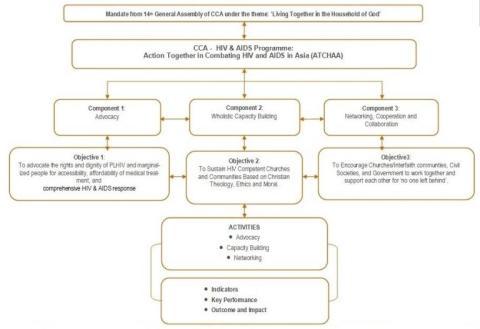
Program to Combat HIV and AIDS (PROCHA)
Asian Ecumenical Disability Advocacy Network (AEDAN)
Ecumenical Solidarity Accompaniment and Diakonia in Asia